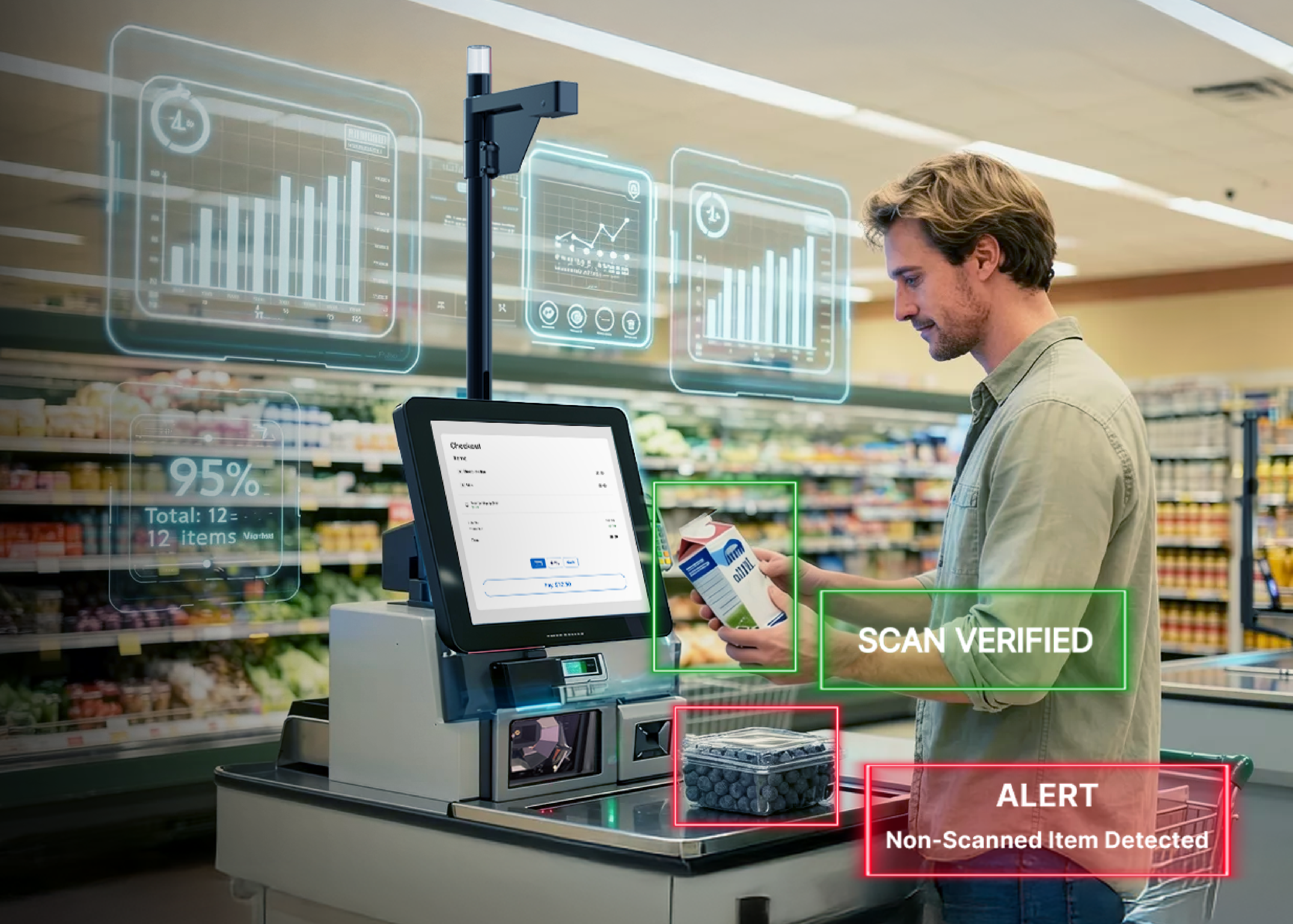
When it comes to retail loss prevention, AI-powered self-checkout is no longer a novel idea. It is emerging as a practical solution for helping retailers flag unusual activity in real time, reduce operational costs, shorten queues, and deliver a better customer experience. But when a promising pilot needs to scale across hundreds of stores, a different set of challenges comes into focus.
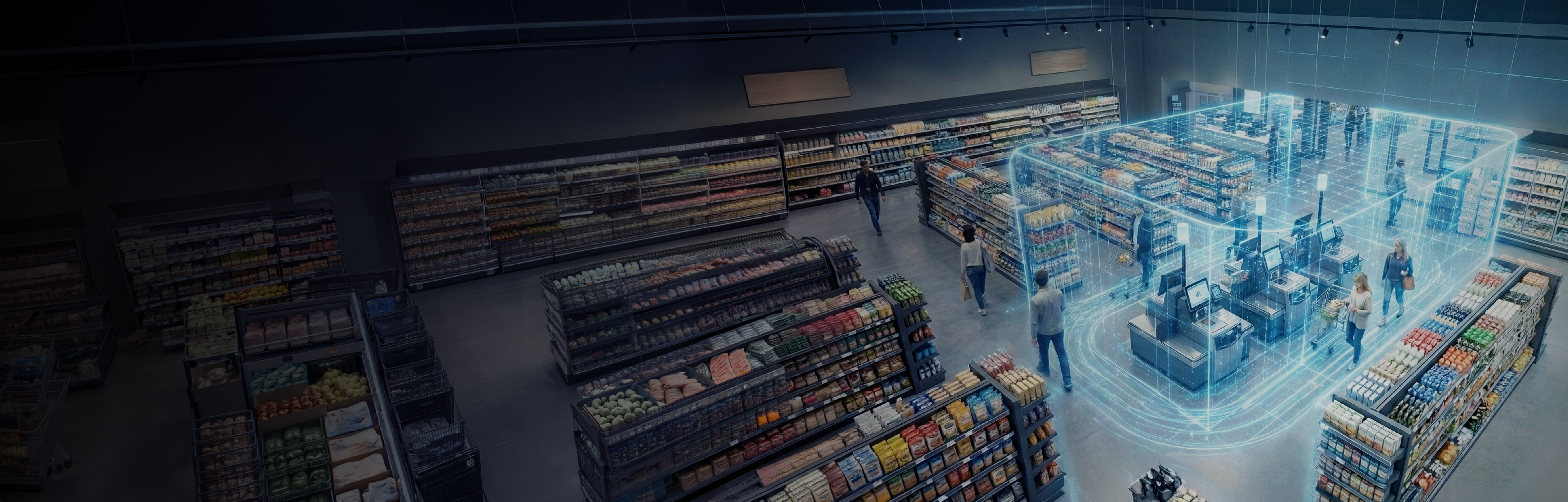
Infrastructure is often where AI deployment becomes challenging outside the lab. Unlike controlled testing environments, retail stores are inherently diverse. Even locations operating under the same brand can differ in floor layouts, checkout configurations, lighting conditions, camera placement, and customer traffic patterns. A hardware and software architecture designed for one location cannot simply be replicated across the network.
Data presents another challenge for AI applications, particularly in self-checkout. Every transaction involves large volumes of images that need to be captured, analyzed, and acted upon within milliseconds. Handling this volume of complex data with minimal latency is critical to keeping AI-powered self-checkout responsive and maintaining a smooth transaction flow.
For retailers pursuing enterprise-scale AI adoption, the conversation is therefore no longer about deploying smarter algorithms. It is about building an infrastructure that can support these workloads reliably at scale, which raises a fundamental question: where and how should AI workloads be processed?
Why Conventional AI Deployment Approaches Fall Short at Scale
Conventional approaches to processing AI workloads typically involve building AI infrastructure on-premises, moving workloads to the cloud, or upgrading existing self-checkout kiosks with AI-capable computing. Each approach can provide the computing power required for AI, but scaling them across diverse retail environments introduces its own trade-offs in cost, infrastructure, and performance.
On-Premises AI: Powerful, but Complex to Deploy
When substantial computing power is required, dedicated on-premises infrastructure may seem like the natural choice. High-performance servers can handle multi-camera feeds and real-time video analytics, but that capability comes with a significant price tag.
The investment extends well beyond the server itself. Networking equipment, additional cabling, power requirements, physical space, installation, and ongoing maintenance all contribute to the total cost of ownership. These challenges can be amplified when AI infrastructure must be replicated across multiple locations. Even for AI-heavy retailers with the budget and technical capabilities to support such infrastructure, the return on investment can be difficult to justify.
Cloud AI: Scalable, but Dependent on Connectivity
Cloud-based AI takes a different approach by shifting computation to centralized platforms. This reduces the need for local servers while providing access to scalable computing resources, making cloud AI a mature and widely adopted model across industries.
But retail stores do not operate like controlled business environments. Network quality and available bandwidth can vary from one location to another, and a connection that performs reliably at one store may not hold up across the rest of the network. Every additional network dependency introduces a potential source of latency. At self-checkout, where small delays can affect transaction flow and customer perception, reliance on network connectivity creates operational uncertainty that retailers are unwilling to accept.
Upgrading Self-Checkout Kiosks: Simple in Concept, Costly at Scale
One common approach to implementing AI-powered self-checkout is to upgrade existing kiosks with AI-capable CPUs or system boards. This provides local computing power without introducing a separate AI server or relying entirely on the cloud.
While upgrading individual self-checkout kiosks may cost less than building an entirely new AI infrastructure, deploying the solution across hundreds or thousands of devices can still represent a significant investment. Hardware replacement, installation, and system integration can add up quickly across a large fleet. What appears to be a straightforward upgrade at the individual kiosk level can therefore become a substantial capital and operational commitment at enterprise scale.
Rethinking AI Infrastructure Through Edge Computing
Do these challenges leave AI-powered self-checkout confined to the lab? Not if AI processing moves closer to where the data is generated.
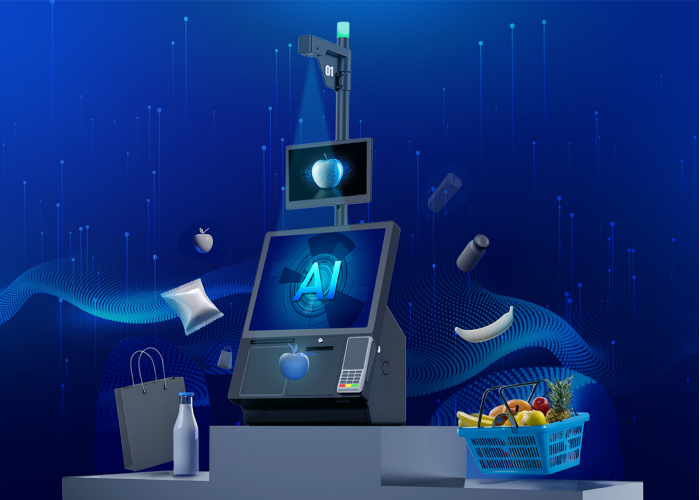
This is where edge computing comes in. An Edge AI Box PC combines a compact form factor with powerful computing capabilities. Often equipped with high-performance CPUs and integrated NPUs, it provides the processing power needed to run AI applications locally. In the retail setting, it can act as an "additional AI brain" for self-checkout kiosks, handling demanding AI tasks and complex visual data while leaving checkout and transaction processing to the kiosk itself.
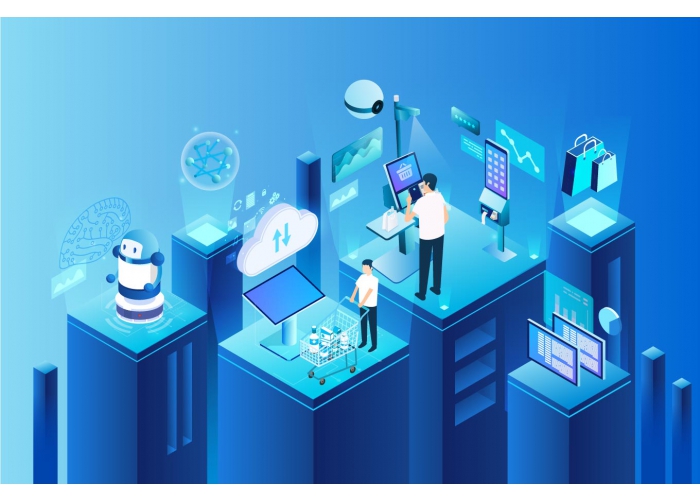
Processing data locally also reduces dependence on network connectivity, minimizing transmission latency and helping maintain the responsive checkout experience that AI-powered self-checkout demands. More importantly, it breaks away from the traditional one-CPU-per-device model, allowing multiple self-checkout kiosks to share the computing capacity of one AI Box PC.
This modular architecture also simplifies expansion and future upgrades. Computing capacity can be scaled according to actual demand, with additional AI Box PCs deployed as usage grows. When AI requirements evolve, there is no need to replace an entire server or upgrade every self-checkout kiosk. Instead, retailers can refresh the AI computing layer independently by replacing the AI Box PC. This reduces hardware disruption and avoids repeating costly kiosk-level upgrades across the fleet.
Platforms like the Flytech KPC6H2 demonstrate how this architecture is becoming commercially accessible. Equipped with Intel® Core™ Ultra processors featuring integrated NPUs, the AI Box PC provides the local AI acceleration that computer vision-based self-checkout applications depend on. It processes camera feeds and flags unusual activity in real time, without routing every frame through the cloud. For retailers, this means a smarter way to deploy AI without redesigning existing infrastructure or investing in a dedicated AI computing unit for every kiosk.
AI-powered self-checkout for loss prevention is no longer a concept confined to the lab. With Edge AI, a smarter and more scalable infrastructure can make AI adoption accessible to retailers of all sizes. Ready to bring AI closer to your self-checkout? Discover how the Flytech KPC6H2 can power your next generation of AI-powered retail.